Showing posts with label d) Human Influences on the Environment. Show all posts

Saturday, June 24, 2017

4.11: Understand the Biological Consequences of Pollution of Air by Sulfur Dioxide and by Carbon Monoxide

BIOLOGICAL CONSEQUENCES OF POLLUTION:

SULFUR DIOXIDE
CARBON MONOXIDE
Diagram showing Sulfur Dioxide Molecules
Diagram showing Carbon Monoxide Molecules
EXPLANATION:

  • Fossil Fuels will Burn to Produce Sulfur Dioxide
  • Sulfur Dioxide will Dissolve in Water Droplets in Clouds, Forming Dilute Sulfuric Acid, Causing Acid Rain
EXPLANATION:

  • Poisonous Gas that is Produced when Fossil Fuels Burn in Limited Amount of Air (Incomplete Combustion)
  • Binds Irreversibly to Haemoglobin and Reduces the Capacity of Oxygen Carried in Red Blood Cells

CONSEQUENCES:

  • Leaches Minerals and Nutrients Out of the Soil and cause Plants and Trees to Die
  • Damages Waxy Layer of Leaves, Making it Difficult for Trees to Absorb Mineral Ions they Need for Growth
  • Makes Rivers and Lakes Too Acidic, Resulting in Aquatic Organisms to Die
  • Corrodes Metals (Steel) and Limestone in Buildings

CONSEQUENCES:

  • Reduces Capacity of Oxygen Carried in Blood so will cause Tiredness, Unconsciousness and Even Death
  • Less Oxygen for Aerobic Respiration so can cause Emphysema
  • If Pregnant, Insufficient Oxygen so Less Aerobic Respiration to Release Energy for Growth of Fetus

4.14: Understand How an Increase in Greenhouse Gases Results in an Enhanced Greenhouse Effect and that this may Lead to Global Warming and its Consequences

GREENHOUSE GASES: Gases that Absorb Infrared Radiation from the Sun and Remains Trapped in the Earth’s Atmosphere, Causing Earth’s Average Temperature to Rise as a Result

ENHANCED GREENHOUSE EFFECT: Caused by the Increased Concentration and Effect of Greenhouse Gases

THE ENHANCED GREENHOUSE EFFECT
Diagram Showing How the Enhanced Greenhouse Effect Occurs
EXPLANATION:

  1. The Sun Emits Rays that Enters the Earth’s Atmosphere
  2. The Heat is Emitted Back from the Earth’s Surface
  3. Some Heat is Reflected Back Out into Space
  4. But Some Heat is Absorbed by Greenhouse Gasses and is Trapped Within the Earth’s Atmosphere so Causes the Earth’s Average Temperature to Rise as a Result

CONSEQUENCES:

  • Climate Change due to Increase in Earth’s Temperature
  • Water Levels will Rise as Glaciers will Melt because of High Temperatures
  • Extinction of Species due to Inhabitable Environment
  • Migration of Species as they will Move to Areas that are More Habitable (No Droughts)
  • Spread of Diseases caused by the Cold Climate
  • Loss of Habitat due to Climate Change (Animals that Live on Glaciers)

4.13: Understand How Human Activities contribute to Greenhouse Gases

GREENHOUSE GASES: Gases that Absorb Infrared Radiation from the Sun and Remains Trapped in the Earth’s Atmosphere, Causing Earth’s Average Temperature to Rise as a Result

MAN-MADE SOURCES OF GREENHOUSE GASES:

GREENHOUSE GAS
HUMAN ACTIVITIES
WATER VAPOUR
  • Naturally Exists in Rivers, Lakes and Oceans
CARBON DIOXIDE
  • Produced when Burning Fuels in Industrial Processes
  • Produced in Car Exhausts
NITROUS OXIDE
  • Released from Fertilisers on Land in Farms
  • Released from Cattle Waste in Farms
  • Produced from High Temperatures in Vehicle Engines
METHANE
  • Released from Rice Paddy Fields
  • Released from Cattle
CFC
  • Used in Fridges and is Released into the Atmosphere when Disposed
  • Used in Aerosol Sprays

4.12: Understand that Water Vapour, Carbon Dioxide, Nitrous Oxide, Methane and CFCs are Greenhouse Gases

GREENHOUSE GASES: Gases that Absorb Infrared Radiation from the Sun and Remains Trapped in the Earth’s Atmosphere, Causing Earth’s Average Temperature to Rise as a Result

EXAMPLES OF GREENHOUSE GASES:

GAS
EXAMPLES
WATER VAPOUR
Rivers, Lakes and Oceans
CARBON DIOXIDE
Deforestation and Using Fuels
NITROUS OXIDE
Fertilisers and Vehicle Engines
METHANE
Rice Paddy Fields and Cattle
CFC
Refrigerators

4.16: Understand that Eutrophication can Result from Leached Minerals from Fertiliser

EUTROPHICATION: When Fertilisers are Washed Off from Land into Rivers and Lakes by Rain

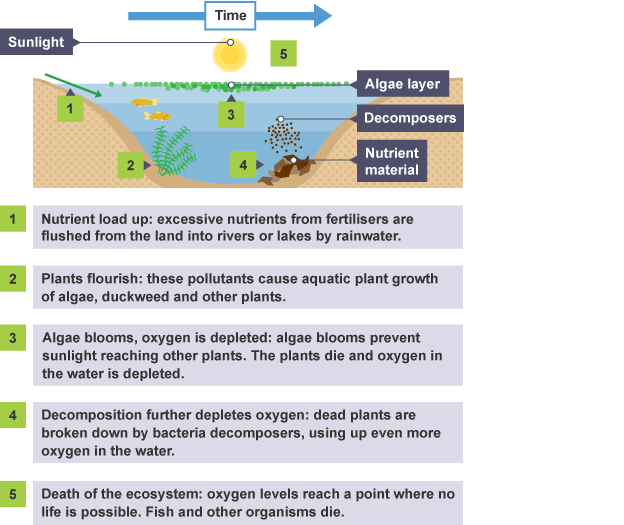
EUTROPHICATION
Diagram Showing the Process of Eutrophication Over a Time Period
EXPLANATION:

  1. Excessive Nutrients from Fertilisers on Land are Washed into Rivers and Lakes by Rain
  2. Excessive Nutrients will Allow Rapid Plant Growth such as Algae, Duckweed and Other Plants
  3. Rapid Algae Growth will cause Algae Bloom to Form on the Surface, Blocking Sunlight from Reaching Plants Underneath. Plants will Die as a Result, causing Less Photosynthesis to Take Place so will cause Depletion of Oxygen levels
  4. Decomposers (Bacteria) will Further Deplete Oxygen levels as they will Respire Aerobically to Break Down Dead Plants
  5. Death of the Ecosystem will Occur as Oxygen Levels Reaches a Point where No Life is Possible, causing Aquatic Organisms to Die such as Fish

4.15: Understand the Biological Consequences of Pollution of Water by Sewage, Including Increases in the Number of Micro-Organisms causing Depletion of Oxygen

BIOLOGICAL CONSEQUENCES OF SEWAGE IN WATER:

WATER POLLUTION BY SEWAGE
Picture Showing Sewage Released into a River
CONSEQUENCES:

  1. REPRODUCTION OF MICRO-ORGANISMS
  • Sewage is Rich in Minerals and Nutrients that Provides Large Amounts of Energy to Allow Organisms such as Decomposers to Reproduce, increasing their Population
  • Sewage is Rich in Nutrients (Phosphates) that will Encourage the Growth of Algae, causing Algae Bloom to Form on the Surface

  1. DEPLETION OF OXYGEN
  • Decomposers will Respire Aerobically to Break Down Sewage and Dead Plants (From Lack of Sunlight Due to Algae Bloom) so will cause Depletion of Oxygen, causing Aquatic Organisms to Die
  • Sewage May Contain Bacteria that will Respire Aerobically, Using Up Oxygen in the Water
  • Sewage will Increase Population of Organisms in the Water so will cause More Aerobic Respiration to take place, Further Increasing the Depletion of Oxygen

4.17: Understand the Effects of Deforestation, Including Leaching, Soil Erosion, Disturbance of the Water Cycle and of the Balance in Atmospheric Oxygen and Carbon Dioxide

DEFORESTATION: Clearing an Area of Trees at a Large Scale

EFFECTS OF DEFORESTATION:

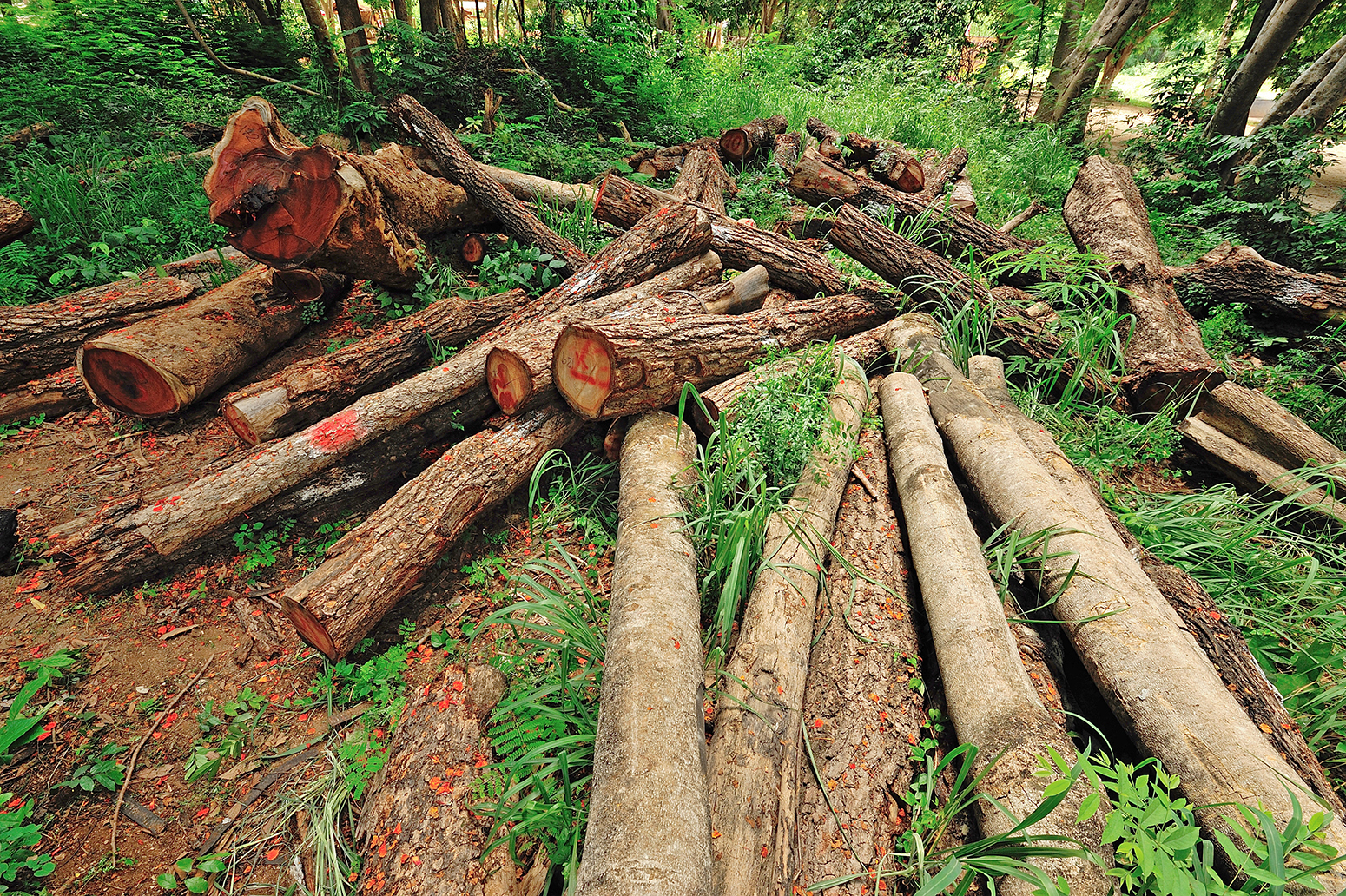
DEFORESTATION
Diagram Showing the Scale of Deforestation
EFFECTS:

  1. LEACHING
  • Trees will Usually Take Up Nutrients and Minerals from the Soil through their Roots
  • Without Trees, Nutrients and Minerals will Remain Unused in the Soil so will be Washed Away Into Rivers and Lakes by Rain (Leaching)

  1. SOIL EROSION
  • Tree Roots Help to Stabilise the Soil, Preventing them from being Eroded by Rain
  • Without Trees, the Soil will be Loose and Unstable so will be Washed Away by Rain

  1. DISTURBANCE OF THE WATER CYCLE
  • Transpiration from Trees will Release Water Vapours into the Atmosphere for Condensation to Form Clouds and to be Returned by Precipitation such as Rain
  • Without Trees, Less Transpiration will occur so will cause less Clouds to Form and Lack of Precipitation, causing Droughts

  1. UNBALANCE IN ATMOSPHERIC OXYGEN AND CARBON DIOXIDE
  • Trees will Conduct Photosynthesis to Take in Carbon Dioxide and Release Oxygen
  • The Removal of Trees will cause Less Photosynthesis to take place so will Increase Carbon Dioxide Levels
  • Trees will also Burn to Produce Carbon Dioxide (Common Method of Deforestation), Increasing Carbon Dioxide Levels in the Atmosphere