DIFFUSION: Net Movement of Particles Down the Concentration Gradient (High Concentration to Low Concentration)
ROLE OF DIFFUSION IN GAS EXCHANGE
|
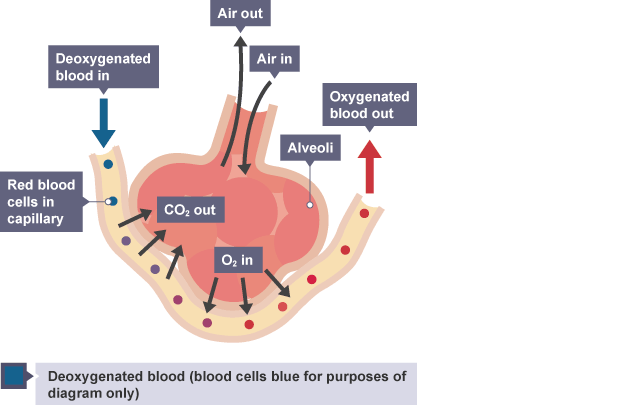
In Alveoli
|
EXPLANATION
|
ROLE OF DIFFUSION IN GAS EXCHANGE
|
In Alveoli
|
EXPLANATION
|
Glucose + Oxygen → Carbon dioxide + Water
C6H12O6 6O2 6CO2 H2O
|
Carbon Dioxide + Water → Glucose + Oxygen
6CO2 H2O C6H12O6 6O2
|
PROCESS
|
DAY
|
NIGHT
|
RESPIRATION
|
✓
|
✓
|
PHOTOSYNTHESIS
|
✓
|
✗
|
PROCESS
|
CARBON DIOXIDE
|
OXYGEN
|
RESPIRATION
|
Out
|
In
|
PHOTOSYNTHESIS
|
In
|
Out
|
DURING THE DAY
|
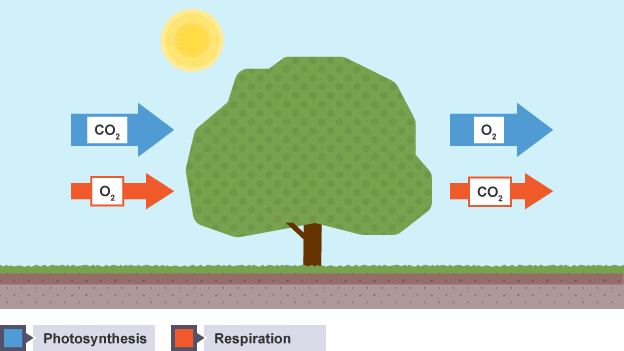
Net Exchange of Gases During the Day
|
|
DURING THE NIGHT
|

Net Exchange of Gases During the Night
|
|
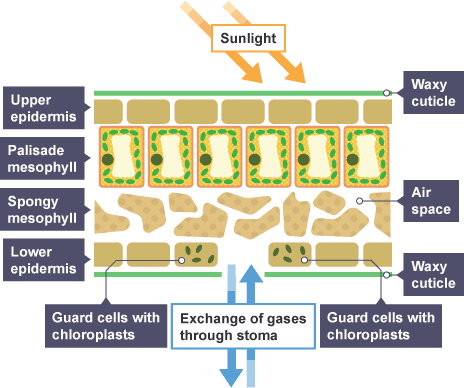
FEATURE
|
ADAPTATION
|
INTERNAL AIR SPACES IN SPONGY MESOPHYLL LAYER
|
Increases the Surface Area to Volume Ratio for the Absorption of Carbon Dioxide
|
GUARD CELLS AROUND STOMATA
|
Allows the Size of the Stomata to be Adjusted to Allow Carbon Dioxide to Diffuse in, Oxygen to Diffuse Out. E.g, Opens during the Day to Allow the Diffusion of Carbon Dioxide for Photosynthesis
|
FLATTENED SHAPE
|
Larger Surface Area to Absorb More Light and Carbon Dioxide for Photosynthesis
|
THIN
|
Short Distance of Diffusion for Carbon Dioxide to Diffuse into Leaf Cells and for Oxygen to Diffuse out of Leaf Cells
|
STOMATA
|
Can Open to Allow Diffusion of Carbon Dioxide into the Leaf for Photosynthesis, and the Diffusion of Oxygen and Water Vapour Out of the Leaf
|
COLOUR
|
CARBON DIOXIDE CONCENTRATION
|
YELLOW
|
High
|
RED
|
Atmospheric
|
PURPLE
|
Low
|
INVESTIGATING EFFECT OF LIGHT ON GAS EXCHANGE
|

Plant in Hydrogencarbonate Indicator to Test Effect of Light on Gas Exchange
|
METHOD:
|
RESULT:
|
DURING THE DAY
|
DURING THE NIGHT
|
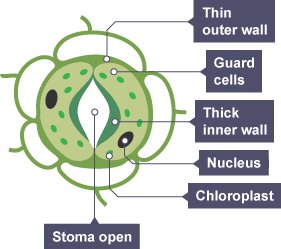
Stomata During the Day
| 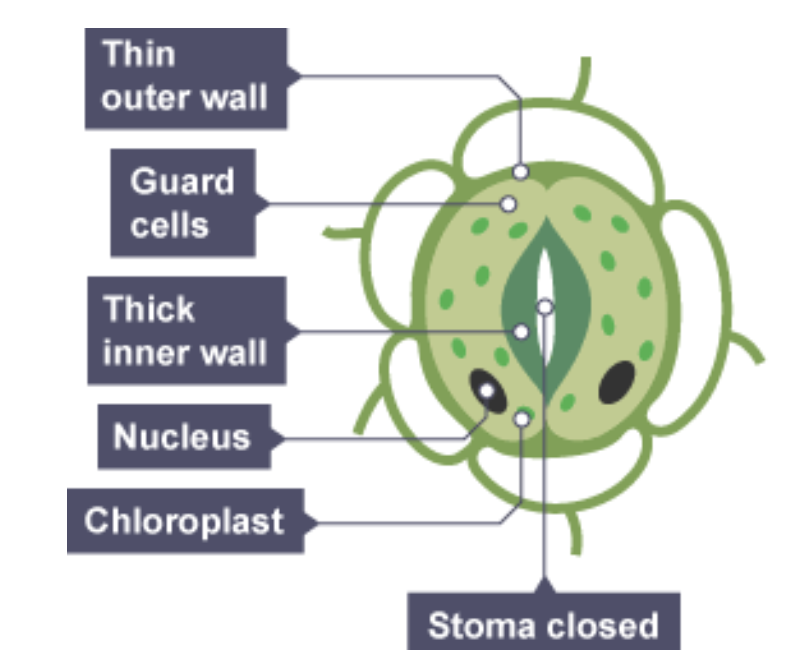
Stomata During the Night
|
|
|
STRUCTURE
|
DESCRIPTION
|
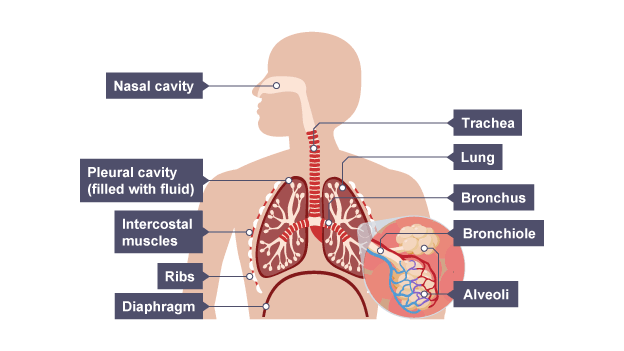
RIBS
|
Bone Structure that Protects Internal Organs such as the Lungs
|
INTERCOSTAL MUSCLE
|
Muscles between the Ribs to control it during Inhalation and Exhalation
|
DIAPHRAGM
|
Sheet of Muscle at the Bottom of the Thorax that Helps with Inhalation and Exhalation
|
TRACHEA
|
Windpipe that Connects the Mouth and Nose to the Lungs
|
BRONCHI
|
Thick Tubes that Divides into Two Bronchi, with One Bronchus for Each Lung
|
BRONCHIOLES
|
Bronchi will Split to Form Smaller Tubes Called Bronchioles that are in the Lungs, Connected to Alveoli
|
ALVEOLI
|
Tiny Air Sacs where Gas Exchange Takes Place
|
PLEURAL MEMBRANE
|
Sticks the Outside of the Lungs to Inside of the Chest Cavity so Lungs Follow Chest Movement, Lubricates the Lungs to Reduce Friction
|

FEATURE
|
ADAPTATION
|
FOLDED
|
Increases the Surface Area to Volume Ratio for the Diffusion of Gases (Efficient Rate of Gas Exchange)
|
THIN CELL WALLS
|
One Cell thick so the Distance of Diffusion is short, Increasing the Rate of Diffusion of Gases
|
STRONG CONCENTRATION GRADIENT
|
Each Alveolus is Surrounded by Blood Capillaries which Maintains a Strong Concentration Gradient and Blood Supply, Allowing Oxygen to Diffuse Out and Carbon Dioxide to Diffuse In
|
EACH ALVEOLUS IS VENTILATED
|
Access to the Lungs Helps Remove Waste Carbon Dioxide and Replenishing Oxygen Levels in the Alveolar Air, Also Allows the Maximum Concentration Gradient between the Blood and the Air in the Alveoli
|
