Showing posts with label a) Reproduction. Show all posts

Saturday, June 24, 2017

3.1: Understand the Differences Between Sexual and Asexual Reproduction

SEXUAL REPRODUCTION: Involves the Joining of Two Gametes Produced by Meiosis from Two Parents to produce Non - Identical offspring, Inheriting Characteristics from Both Parents

ADVANTAGES
DISADVANTAGES
Increases Variation
Takes Long Time and Energy to Find Mates
Organism can Adapt to New Environments
Not Possible for Isolated Members
Disease is Less Likely to Affect Population (Due to Variation)


ASEXUAL REPRODUCTION: Involves Only One Parent that Produces Offsprings that are Genetically Identical to their Parents by Mitosis

ADVANTAGES
DISADVANTAGES
Population can be Increased Rapidly
Decreases Variation
Can Exploit Suitable Environments Quickly
Vulnerable to Change in Conditions (Can only Exploit Suitable Environments)

Disease is More Likely Affect Whole Population

3.2: Understand that Fertilisation Involves the Fusion of a Male and Female Gamete to Produce a Zygote that Undergoes Cell Division and Develops into an Embryo

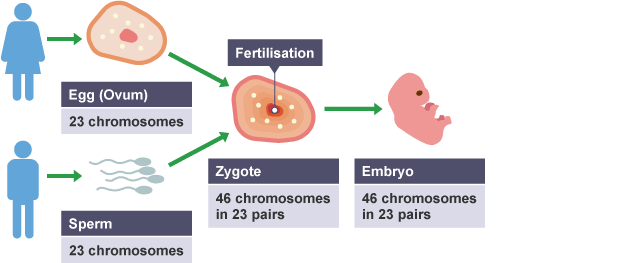
FERTILISATION: Fusion of a Male and Female Gamete to Produce a Zygote that Undergoes Cell Division (Mitosis) and Develops into an Embryo

FERTILISATION
 
Diagram showing the Process of Fertilisation
EXPLANATION:
  • An Egg Cell and Sperm Cell are Haploid Cells, Containing 23 Chromosomes Each (Half of the 46 Chromosomes Needed to Form a Zygote)
  • When Fertilisation Occurs, the Fertilised Egg Cell will Form a Zygote, a Diploid Cell with 46 Chromosomes (23 Chromosomes from Each Gamete)
  • The Zygote will Contain a Mixture of Genetic Information from Both Parents so will result in Genetic Variation

3.3: Describe the Structure of an Insect - Pollinated and a Wind - Pollinated Flower and Explain How each is Adapted for Pollination

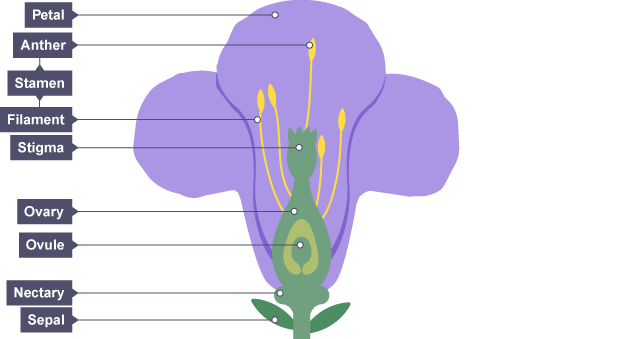
STRUCTURES OF FLOWERS:

STRUCTURE
DESCRIPTION
SEPALS
Protects Unopened lower
PETALS
Brightly Coloured in Insect - Pollinated Flowers to Attract Insects
STAMENS
Male Part of the Flower, Consisting of Filament and Anther
FILAMENT
Positions Anther to Release Male Sex Cell (Pollen Grain)
ANTHERS
Produces and Releases the Male Sex Cell (Pollen Grain)
PISTILS
Female Part of the Flower, Consisting of Ovule, Ovary and Stigma
STIGMA
Top of the Female Part of the Flower which Collects Pollen Grains
OVARY
Produced the Female Sex Cell (Ovum)
NECTARY
Produces a Sugary Solution Called Nectar in Insect - Pollinated Flowers to Attract Insects


INSECT POLLINATED FLOWER: Flower that Requires Pollen to be Distributed by Insects

Diagram:


ADAPTATIONS

FEATURE
EXPLANATION
PETALS
Large and Brightly - Coloured to Attract Insects
SCENT AND NECTAR
Scented Nectar to Attract Insects
NUMBER OF POLLEN GRAINS
Moderate - Insects Transfer Pollen Grains Efficiently (High Chances of Pollination)
POLLEN GRAINS
Sticky and Spiky to Hang onto Insects
ANTHERS
Inside Flower, Stiff and Firmly Attached to Brush Against Insects
STIGMA
Inside Flower, Sticky so Pollen Grains Stick to it When an Insect Brushes Past


WIND POLLINATED FLOWER: Flowers that Require Pollen to be Distributed by Wind

Diagram:


ADAPTATIONS

FEATURE
EXPLANATION
PETALS
Small and Dull (Green or Brown) as they Do Not Need to Attract Insects
SCENT AND NECTAR
No Scented Nectar as they Do Not Need to Attract Insects
NUMBER OF POLLEN GRAINS
Large Amounts - Most Pollen Grains are Not Transferred to Another Flower (Increase Chances of Pollination)
POLLEN GRAINS
Smooth and Light so can Easily be Carried by Wind
ANTHERS
Outside Flower, Loose on Long Filaments to Release Pollen Grains Easily
STIGMA
Outside Flower, Feathery to Catch Drifting Pollen Grains

3.5: Understand the Conditions Needed for Seed Germination

GERMINATION: Process Controlled by Enzymes in Which the Seed Develops into a Plant

Diagram:


STRUCTURE:

STRUCTURE
DESCRIPTION
EMBRYO
Young Root (Radicle) and Shoot (Plumule) that will Become the Adult Plant
FOOD STORE
For Aerobic Respiration to Release Energy for Growth of Seed, E.g, Growth of Roots
SEED COAT
Optimum Temperature for Enzymes to Increase Growth Rate and Enzyme Activity


CONDITIONS NEEDED FOR SEED GERMINATION:  

FEATURE
EXPLANATION
WATER
Allows the Seed to Swell with Water and Activates Enzymes to break down the Food Reserves in Seeds (Starch)
OXYGEN
For Aerobic Respiration to Release Energy for Growth of Seed, E.g, Growth of Roots
WARMTH
Optimum Temperature for Enzymes to Increase Growth Rate and Enzyme Activity

3.4: Understand that the Growth of the Pollen Tube followed by Fertilisation Leads to Seed and Fruit Formation

MALE GAMETE IN PLANTS: Pollen Grain  

FEMALE GAMETE IN PLANTS: Ovum

SEED AND FRUIT FORMATION
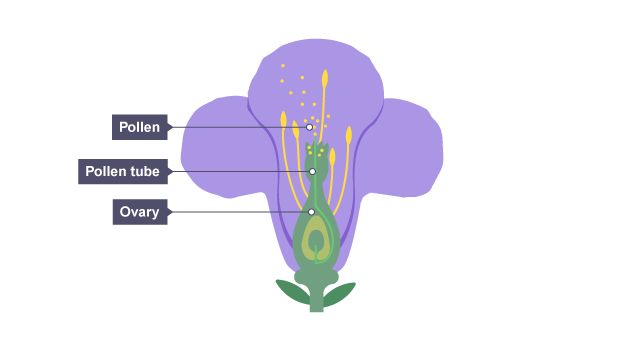
Diagram showing How a Seed and Fruit is Formed
EXPLANATION:
  • Pollen Grain will Land on Stigma
  • Pollen Tube Grows Out of the Pollen Grain and Down the Style into the Ovary into the Ovule
  • The Male Nucleus Travels Down this Tube from the Pollen Grain and Fuses with the Female Egg Nucleus in the Ovule to Form a Zygote, Zygote will Undergo Mitosis to Develop to Form a Seed
  • Ovule will become the Seed, Ovule Wall will Become the Seed Coat
  • Ovary will become the Fruit

3.7: Understand that Plants can Reproduce Asexually by Natural Methods (illustrated by Runners) and by Artificial Methods (illustrated by Cuttings)

ASEXUAL REPRODUCTION: Involves Only One Parent that Produces Offsprings that are Genetically Identical to their Parents by Mitosis

RUNNER (NATURAL)
CUTTINGS (ARTIFICIAL)
spider-plant-baby.jpg
Diagram showing Runners (Branches) in a Spider Plant
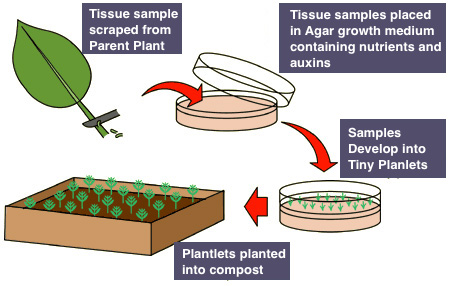
Diagram showing the Process of Cuttings

  • Some Plants Grow Side Branches that Contain Plantlets which Specialise into Forming Root Hair Cells when they Touch the Ground
  • These Plantlets will Grow Roots and Plants will Grow, Allowing Asexual Reproduction


  • Tissue Sample is Scraped from Parent Plant
  • Tissue Samples are Placed in Agar Growth Medium Containing Nutrients and Auxins
  • Samples Develop into Tiny Plantlets
  • Plantlets are Planted into Compost

3.6: Understand How Germinating Seeds Utilise Food Reserves until the Seedling can Carry Out Photosynthesis

GERMINATION: Process Controlled by Enzymes in Which the Seed Develops into a Plant

UTILISATION OF FOOD RESERVES IN SEEDS
Diagram showing Reactions that Take Place in the Cotyledon (Food Store)
EXPLANATION:
  • Cotyledon contains Starch which is Used as a Food Store in Seeds
  • Amylase will Break Down Starch Into Glucose
  • Glucose will be Used in Aerobic Respiration to Release Energy for Growth
  • This will Continue until the Seed Germinates and can Photosynthesize Independently

3.8: Describe the Structure and Explain the Function of the Male and Female Reproductive Systems

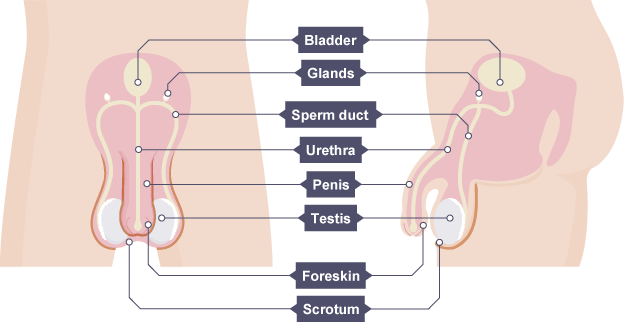
MALE REPRODUCTIVE SYSTEM: The Male Reproductive System includes the  Testes, Glands, Sperm Ducts, Urethra and Penis

Diagram:
                        
STRUCTURE:

STRUCTURE
DESCRIPTION
SEX GLAND
Produces Fluids called Semen that will Provide the Sperm Cells with Nutrients
SPERM DUCT
Sperm Passes through the Sperm Duct to be Mixed with Fluids Produced by the Sex Gland
URETHRA
Tube Inside the Penis that can Carry Out Urine or Semen, a Ring of Muscle in the Urethra Prevents the Urine and Semen from Mixing
TESTIS
Contained in a Bag of Skin (Scrotum) and Produces Sperm (Male Gamete) and Testosterone (Hormone)
PENIS
Passes Urine Out of the Body from the Bladder and Allows Semen to Pass into the Vagina of a Woman during Sexual Intercourse


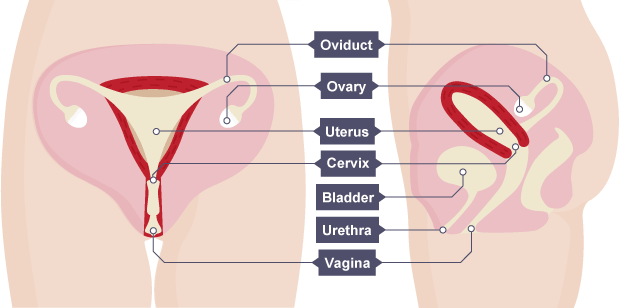
FEMALE REPRODUCTIVE SYSTEM: The Female Reproductive System includes the  Ovaries, Oviduct, Uterus, Cervix and Vagina

Diagram:
                      large


STRUCTURE:

STRUCTURE
DESCRIPTION
OVIDUCT
Connects the Ovary to the Uterus and is Lined with Ciliated cells to Push the Released Ovum Towards the Uterus for Fertilisation
OVARY
Contains Ova (Female Gametes) which Will Mature and Develop when FSH is Released
UTERUS
Muscular Bag with a Soft Lining where the Fertilised Egg Cell will be Implanted to Develop into a Fetus
CERVIX
Ring of Muscle at the Lower End of the Uterus to Keep the Developing Fetus in Place during Pregnancy
URETHRA
Tube that Passes Urine Out of the Body from the Bladder
VAGINA
Muscular Tube that Leads to the inside of the Woman’s Body, Where the Male’s Penis will Enter during Sexual Intercourse